

How to Study Smarter for the NCLEX — Not Harder
Why “More Hours” Isn’t the Answer

Study smarter
Let me guess…
You’ve stayed up late.
You’ve reread the same notes five times.
You’ve highlighted everything in three different colors.
And somehow… it still isn’t sticking.
If you’ve ever thought, “I study all the time, but I’m not seeing results,” I want you to hear this clearly:
👉 You are not lazy.
👉 You are not bad at nursing.
👉 You are not broken.
You’re just using a study method that works against your brain instead of with it.
And yes — there is a better way.
Let’s dive in!
🔍 Why Studying Harder Makes Things Worse
Here’s the honest truth most students aren’t told:
More hours ≠ more learning
Exhaustion kills memory
Anxiety blocks critical thinking
Cramming creates short-term recall, not real understanding
When your brain is tired, stressed, and overloaded, it stops absorbing new information. That’s why you can stare at flashcards for two hours and still feel like nothing stayed in your head.
Smarter studying isn’t about doing more.
It’s about doing the right things in the right way.

Let’s break it down.
Shift #1: Study in Short, Focused Blocks (Not Marathon Sessions)
Instead of 3–5 hour study marathons, try this:
🕒 25–40 minute focused study blocks
☕ 5–10 minute breaks
🔁 Repeat 2–4 times, then stop
Your brain learns best in short bursts. When you push past your mental limit, everything after that becomes low-quality studying.
Try This Today:
Set a timer for 30 minutes.
Study ONE topic only.
Stop when the timer ends — even if you feel like you could keep going.
That discipline builds consistency without burnout.
Shift #2: Stop Just Reading — Start Actively Thinking
Rereading notes feels productive… but it’s one of the weakest study methods.
Instead, use active learning:
✔ Teach the topic out loud like you’re explaining it to a patient
✔ Write 3–5 questions about what you just studied
✔ Answer practice questions immediately
✔ Summarize the topic in your own words
✔ Draw simple concept maps
Mini Challenge:
After your next study session, write this sentence:
"If I had to explain this to a patient or a new nurse, I would say…"
That’s where real learning happens.
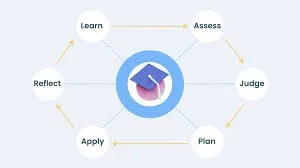
A study plan.
✏️ FREE DOWNLOAD: "NCLEX Study Smarter Workbook"
Shift #3: Use Practice Questions the RIGHT Way
Practice questions are not just for testing — they’re for learning.
Here’s how to use them smarter:
1️⃣ Answer 10–20 questions
2️⃣ Review every rationale (even the ones you got right)
3️⃣ Write down:
Why the correct answer was right
Why the others were wrong
4️⃣ Identify the pattern (content gap? prioritization issue? anxiety?)
Golden Rule:
Don’t chase your score. Chase your understanding.
Shift #4: Create a “Weak Spot” Study Plan
Most students avoid their hardest subjects.
That’s backwards.
Instead:
📌 List your 3 weakest areas
📌 Schedule them into your week
📌 Study them in small daily chunks
📌 Revisit them every 2–3 days
Your confidence grows fastest where your fear used to be.
Shift #5: Study Like a Nurse, Not Like a Student
NCLEX and real nursing are about:
Prioritization
Safety
Patterns
Critical thinking
Patient outcomes
So your studying should match that.
Upgrade Your Study Style:
🩺 Turn facts into patient scenarios
🩺 Ask “What would I do first?”
🩺 Group meds by class, not alphabet
🩺 Practice SBAR when reviewing cases
🩺 Use real-life examples to anchor memory
Shift #6: Protect Your Brain (Sleep, Food, Breaks Matter)
This isn’t fluff — it’s science.
💤 Sleep = memory consolidation
🥗 Food = brain fuel
🚶 Movement = stress relief + focus
💧 Hydration = cognitive clarity
Studying while exhausted is like trying to chart with your eyes closed.
Try This Tonight:
Instead of one more hour of studying, go to bed 45 minutes earlier.
Watch what happens to your recall tomorrow.
A Real Moment from My Students
One of my NCLEX students told me:
"I study 6–8 hours a day and still feel like I’m failing."
We changed her routine to:
✔ 2–3 focused sessions/day
✔ Practice questions with deep review
✔ No studying after 8 PM
✔ One rest day per week
Three weeks later, she said:
"I actually remember things now. I feel calmer. And my scores are improving."
That’s the power of studying smarter.

You CAN do this!
➡️ [Join the Facebook Group here] We are aware the link does not work working on getting out a promotion so you can join easily on Facebook
💬 Join the Conversation:

Comment below!
Share your stories in the comments or reach out—I’d love to hear from you.
What’s one study habit that isn’t working for you anymore?
Which subject do you avoid the most right now?
What’s one change you’re willing to try this week?
Any tips or advice for other new nurses?

Follow and Like!
💙If you are not on our email list, click the contact link here.
💙Don’t forget to follow me on my Instagram account @nclex_one_on_one_tutoring and share it with your colleagues!
💙Join the Facebook Group: One on one tips NCLEX and New nurses
Want Mentorship?

Nurse Mentor
If you’re a new nurse (or an experienced one) who wants help building communication skills, I’m here to support you.
Let’s imagine a nursing culture where we handle conflict with courage, professionalism, and care—not fear or silence.
Let’s build that together.

