

How to Know If You’re Actually Retaining What You Study
Because reviewing hours doesn’t always mean your brain is storing it — and the NCLEX will show the difference

Reading glasses and a highlighter resting on a text book.
💬 When You’ve Studied It — But Still Miss It
You’ve studied potassium.
You’ve practiced electrolyte questions.
You know the number: 3.5–5.0 mEq/L.
And then you hit this NCLEX-style case:
Let’s dive in!
❓NCLEX-Style Question:
A client with chronic kidney disease has a potassium level of 6.4 mEq/L.
They report muscle weakness and mild diarrhea.
You notice peaked T-waves on the telemetry monitor.
What’s your priority action?
A. Administer sodium polystyrene sulfonate
B. Place the client on a cardiac monitor
C. Teach a low-potassium diet
D. Prepare to give calcium gluconate
Your brain locks on “calcium gluconate = protect the heart,” and you circle D.
But you missed the step before treatment — monitoring.
Answer: B — Place on a cardiac monitor.
Even though calcium may be needed, the first action in this case — before any IV med — is to recognize the client is at immediate risk and start cardiac monitoring.
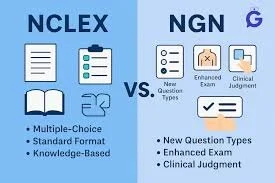
NCLEX vs NGN
🔄 Why This Happens — Even When You’ve Studied
Student reflection:
“I had just reviewed hyperkalemia, but when the case came up, I froze. I knew the lab was high, and calcium helps — but I didn’t think about what the NCLEX wants first: monitor before meds.”
This isn’t about not studying hard enough.
This is about what your brain retrieves under pressure.
🧠 What Retention Actually Means
Real retention shows up when you can:
✔ Identify the cues
✔ Recall the concept
✔ Link it to risk
✔ Choose what to do first
“I remembered calcium protects the heart — but I didn’t retain the sequence of actions. And the NCLEX wanted me to think, not just match key terms.”
Retention
⚠️ 4 Signs You’re Not Actually Retaining It
1. You pick the “right word” — but not the right action
“Calcium jumped out because I linked it to heart protection. But I didn’t slow down to see what the patient’s status required first.”
→ Red flag: Word matching instead of clinical prioritizing.
2. You know the labs — but not the why
“6.4 is high, but I forgot that peaked T-waves = heart risk = monitoring.”
→ Red flag: Numbers without interpretation.
3. You confuse treatment with timing
“I panicked and picked the most ‘serious’ answer — but didn’t ask what comes first in real nursing care.”
→ Red flag: You’ve memorized the plan, not practiced triage.
4. You learn it once — but don’t revisit it in context
“I knew calcium was in the slide deck. But I’d never seen it in a case scenario.”
→ Red flag: Passive review vs. active scenario-based thinking.
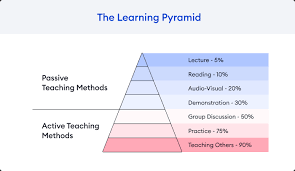
Learning methods that encourage retention
🧪 How to Measure Retention (Not Just Study Time)
✔ Teach It Back
Explain hyperkalemia out loud to yourself:
What causes it?
What are the early and late signs?
What do you do first?
Can you do it without notes?
✔ Use a Brain Dump
Before studying potassium again, list:
Normal range
Risk factors
Signs & symptoms
Prioritized interventions
Now check what you missed — that’s what wasn’t retained.
✔ Do a Practice + Debrief
Answer a question, then:
Write why the right answer is correct
Say why the others are wrong
Ask what clues in the question mattered
“When I started explaining why I picked something, I realized I was skipping steps — that’s how I knew I hadn’t really retained it.”
🛠️ The Retention Toolkit That Helps It Stick
Tool Purpose
Study Tracker Logs comprehension, not time
Teach-It-Back Sheet Forces recall + clarity
Brain Dump Sheet Clears mental clutter
Mistake Buster Turns missed questions into lessons
NGN Thinking Map Practice judgment step by step
✏️ FREE DOWNLOAD: "Retention Toolkit"
📥 Download the Retention Toolkit
Start building retrieval strength — not just review habits.
Includes:
✔ Teach-It-Back Guide
✔ Brain Dump Tracker
✔ Mistake Buster Reflection
✔ Retention Self-Check
✔ NGN Clinical Thinking Map
🧘 Retention = Pattern Thinking Under Pressure
You don’t pass because you “saw that before.”
You pass because your brain can think through the problem, even when the question looks unfamiliar.
“I used to memorize labs. Now I think: What’s the cue? What’s the risk? What comes first?”
When your thinking flows like nursing care — not just trivia recall — that’s when you’re ready.

You CAN do this!
➡️ [Join the Facebook Group here] We are aware the link does not work working on getting out a promotion so you can join easily on Facebook
💬 Join the Conversation:

Comment below!
Share your stories in the comments or reach out—I’d love to hear from you.
Which free tool do you think will help you the most (Study Tracker Sheet, Teach Back Sheet, Brain Dump before studing, or Mistake Buster Tool)?
Any tips or advice for other new nurses?

Follow and Like!
💙If you are not on our email list, click the contact link here.
💙Don’t forget to follow me on my Instagram account @nclex_one_on_one_tutoring and share it with your colleagues!
💙Join the Facebook Group: One on one tips NCLEX and New nurses
Want Mentorship?

Nurse Mentor
If you’re a new nurse (or an experienced one) who wants help building communication skills, I’m here to support you.
Let’s imagine a nursing culture where we handle conflict with courage, professionalism, and care—not fear or silence.
Let’s build that together.

